You Don’t Have to Be a “Perfect” Parent to Raise a Securely Attached Child

If you’ve ever snapped at your child during a never-ending bedtime, missed a cue because you were distracted, or wondered whether you’re a good parent, you’re in good company. One of the most common fears I hear from new parents is some version of: What if I mess my child up?
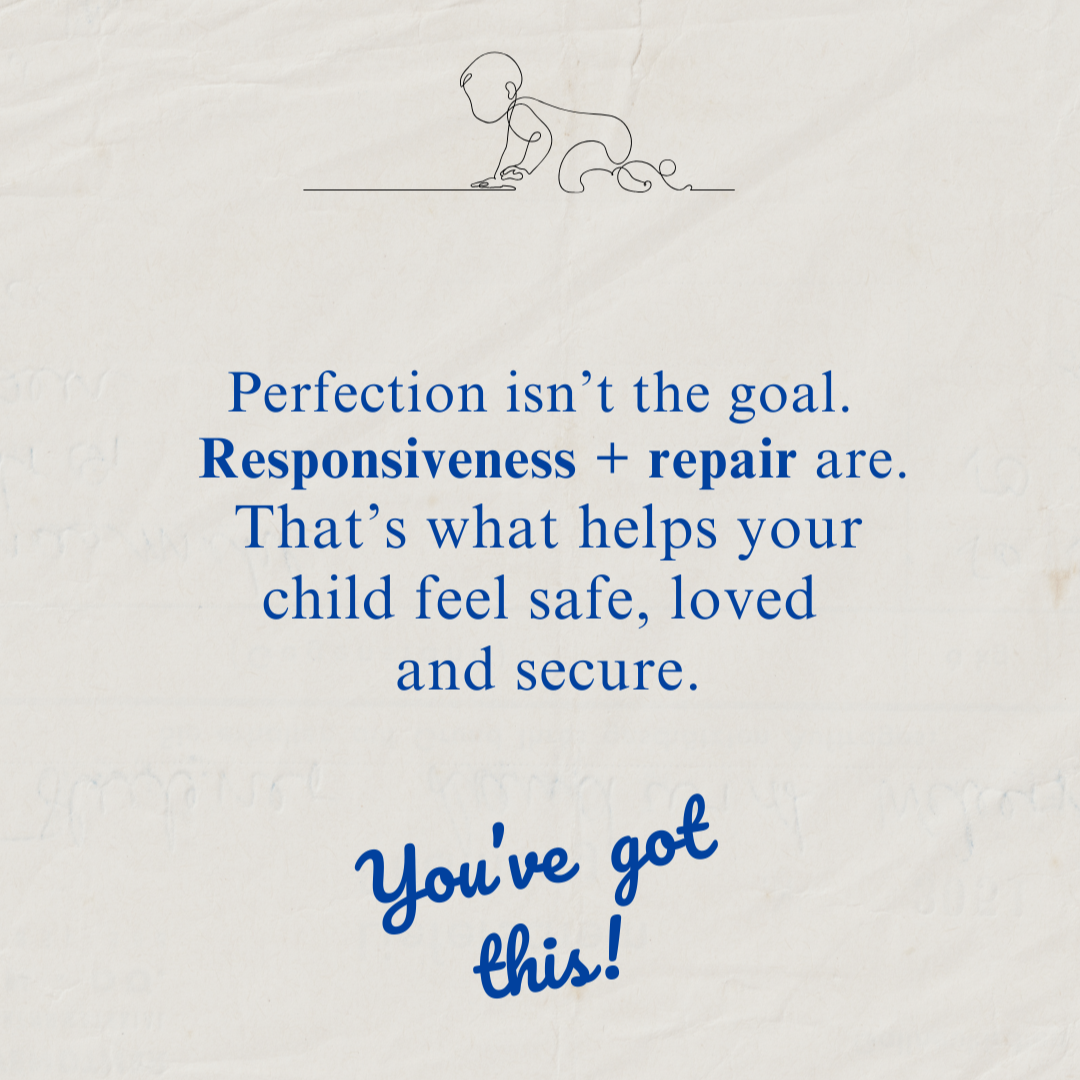
The good news is that secure attachment isn’t built through perfection. It’s built through connection, consistency, and repair.
The Myth of the Perfect Parent
Many parents imagine secure attachment as a kind of endless patience: always knowing exactly what their child needs, responding immediately to every cry, and never losing their cool. But that picture isn’t just unrealistic—it’s not what the research tells us.
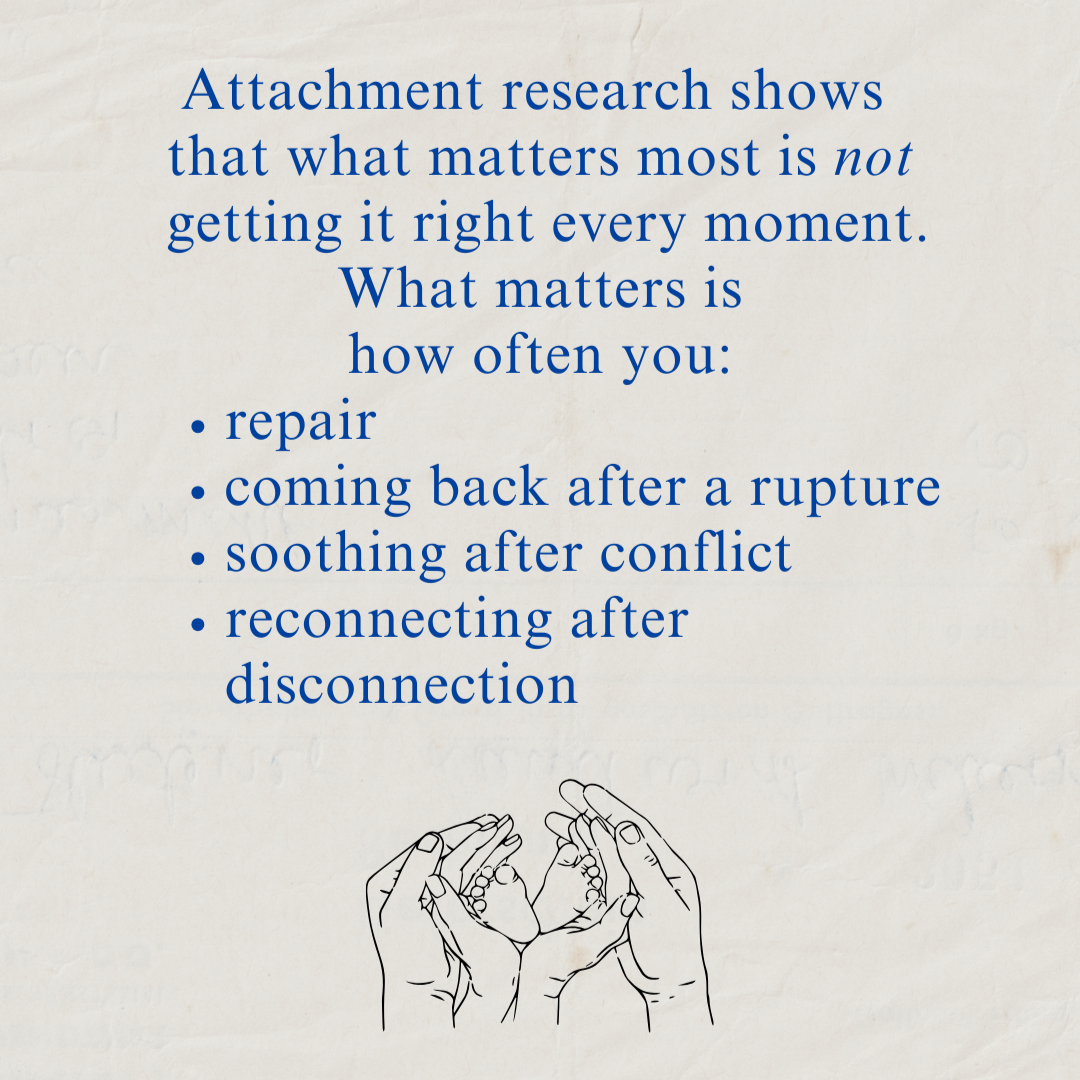
Attachment isn’t about getting it right all the time. It’s about showing up, imperfectly but reliably, over and over again.
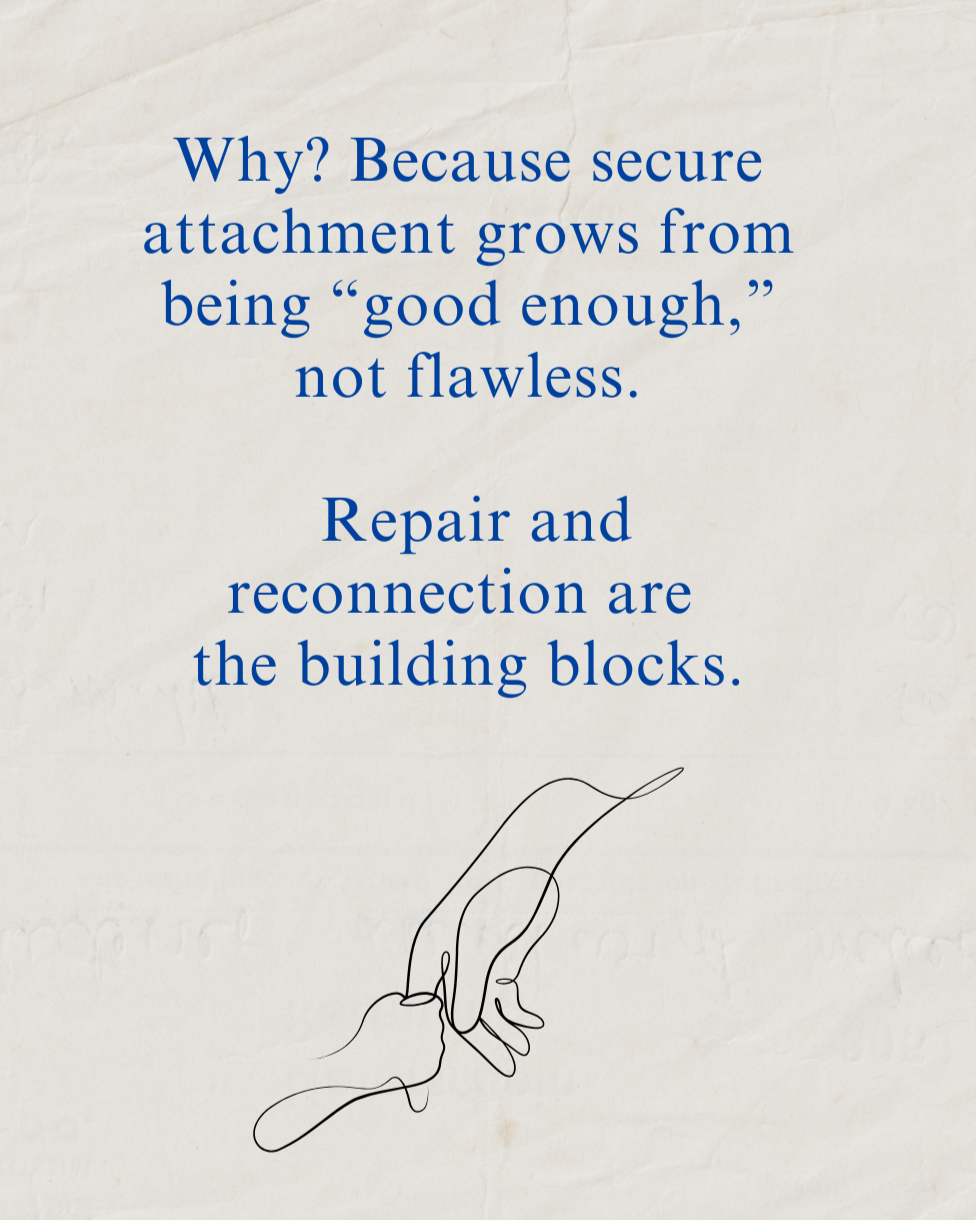
In fact, researchers have found that parents only need to respond sensitively to their child a portion of the time to support secure attachment. Children don’t require flawless caregiving. They need caregivers who are “good enough”—people who are present, attuned, and willing to reconnect after inevitable missteps.
This idea draws from decades of attachment research, including pediatrician and psychoanalyst Donald Winnicott’s concept of the “good enough” parent, as well as later studies suggesting that caregivers do not need to respond perfectly to foster secure attachment. In fact, some research suggests that parents who respond sensitively roughly 30% of the time can still support healthy attachment and development.

What This Means for Parents
Secure attachment does not require:
Endless patience.
Instant responses every time your child needs something.
Always saying or doing the “right” thing.
Never feeling frustrated, overwhelmed, or touched out.
Parenting is demanding, especially during the baby and toddler years. You are balancing your child’s needs alongside your own exhaustion, relationships, work responsibilities, and the countless invisible tasks that fill your days. Parents have needs, too.
Your moments of imperfection are not evidence that you’re failing. They’re evidence that you’re human.
Repair Is Part of the Process
One of the most important (and often overlooked) parts of attachment is repair.
Repair happens when you reconnect after a difficult moment. Maybe you raised your voice and later offered a hug and an apology. Maybe you missed your baby’s cue because you were distracted, but then you circled back with warmth and attention. Maybe you simply said, “Whoops, let’s try that again.”
These moments matter.
Children don’t learn trust because their parents never make mistakes. They learn trust because they experience what happens after mistakes: reconnection, comfort, and the reassurance that relationships can withstand hard moments.
In many ways, repair is where some of the deepest attachment work happens. Rather than viewing “messing up” as evidence that we’re failing, we can reframe it as an opportunity to reconnect.
A More Compassionate Standard
The pressure to be the “perfect parent” is everywhere: on social media, in parenting books, among friends, and in the internal comparisons we make to other families. Somewhere along the way, perfection seems to have become the assignment. This is neither realistic, nor is it helpful for parents or children.
Your child does not need a parent who never struggles. They need a parent who keeps showing up.
So the next time you catch yourself replaying a rough morning or questioning whether you’re doing enough, remember this: secure attachment isn’t built in your best moments alone. It’s built in the ordinary rhythms of everyday life—the feeding, the comforting, the laughing, the apologizing, and the trying again.
Your baby doesn’t need perfect.
They just need you.